A Designer's Honest Take on That Toilet Symbol Embroidery File
The First Impression: Simple, Bold, and Surprisingly Universal
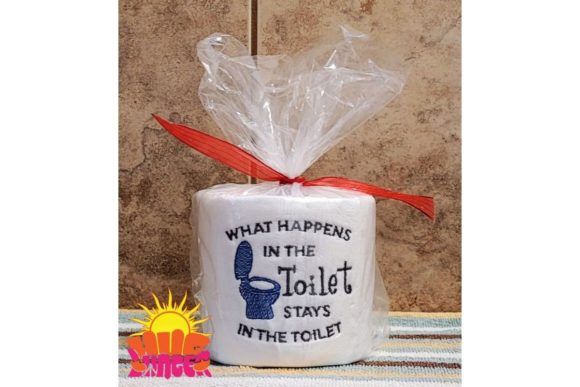
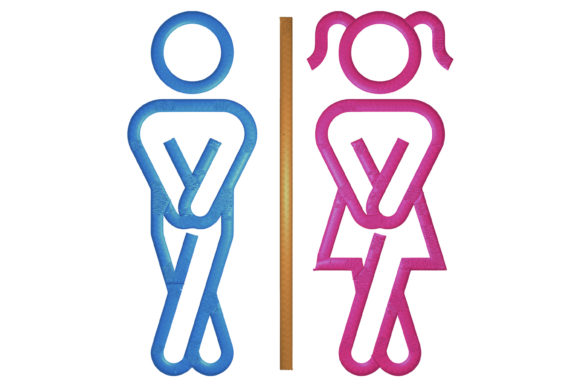
When you first open a design like this, your mind immediately starts categorizing it. This particular Toilet Symbol design is exactly what it says it is: a clear, graphic representation of a toilet. There’s no whimsical filigree or playful background elements. It’s straightforward. That simplicity is its greatest strength and dictates its entire application universe. The mood it creates is functional, slightly humorous in the right context, and utterly unambiguous. It’s not a design trying to be pretty; it’s a design trying to be clear. This makes its visual personality perfect for projects where communication is the primary goal, not decoration.
From a layout perspective, the symbol itself is typically well-balanced, with a defined bowl shape and seat. The detail level is moderate—it won’t be a mass of intricate stitch density that takes forever to run, which is a practical plus for a craft business. This isn’t a design you’d put on a delicate heirloom quilt. It naturally belongs on utilitarian items, novelty gifts, or anything related to bathrooms, plumbing, or that specific brand of cheeky humor.
The Real-Life Project Scenario: A Customized Housewarming Tote
Imagine you’re preparing items for a craft fair booth specializing in humorous, personalized home goods. A client, or perhaps you as the maker, wants a set of custom apparel and accessories for a plumber’s birthday or a cheeky housewarming gift. You pull out a sturdy canvas tote bag—a fantastic base for bold designs. You hoop it up, load this machine embroidery design, and stitch it out.
On the bag, the symbol will look clean and graphic. It won’t compete with other elements because it’s the star. For a small shop product, this clarity translates directly to customer trust and engagement. Someone browsing your Etsy listings or booth sees it and instantly understands the product. It’s a confident, functional design choice. This same principle applies to a sweatshirt embroidery for a plumbing company’s uniform, an embroidered patch for a tool kit, or a simple tea towel for a bathroom. The value it adds is in its instant recognition.
Beyond the Novelty: Professional and Gift Applications
While humorous, this design can carry a professionalism in the right setting. For a commercial plumbing service looking to brand their custom apparel, a clean, well-stitched logo incorporating this symbol could work. For personalized gifts, think of baby embroidery on a onesie for a plumber’s new child—it’s a niche but potentially heartfelt application. As a holiday embroidery gag gift on a pillow cover or apron, it succeeds because the theme is so focused. Its giftability is high for a very specific audience.
The handmade presentation benefits from the design’s bold shapes. On a dark fabric, using a bright white thread for the bowl, the contrast will be sharp and satisfying. On a light fabric, perhaps a black satin stitch outline would define it perfectly. This clarity boosts the perceived quality of your finished product.
Caution Zones: Where to Think Before You Stitch
Not every embroidery project is a good fit, and a seasoned designer knows to assess the pitfalls. This design, with its likely defined corners and closed shapes, requires careful handling on certain materials.
On thin fabric like a standard t-shirt, the stitch build-up from the fill stitches for the bowl could cause puckering or a stiff feel. A strong stabilizer is non-negotiable here. On stretchy fabric, you risk distortion of the circular shapes. Textured fabrics like some sweaters might obscure the clean lines.
Perhaps the biggest consideration is scale. If the provided embroidery file is only available in larger hoop sizes, attempting to miniaturize it for a baby clothes item or a cap could be problematic. The details might become too dense or blur together. Always test the design on scrap fabric first, ideally the same fabric as your final project. Check how the small details, like the seat hinge area, stitch out. Are they clear or a muddle of threads?
For curved surfaces like caps, the circular bowl shape might need slight digitizing adjustments to look perfect, which isn’t possible if you’re using the file as-is. This is a moment to judge whether the design’s integrity holds up on the 3D surface. Also, consider products that need frequent washing. A high-density fill stitch area on a kitchen towel (used ironically) might wear differently than the outline stitches. Thread color choice and quality become even more critical here.
Practical Designer Notes for Your Workflow
Before committing this to a client project or your small business merchandise, integrate a few straightforward checks into your process. They save time, materials, and reputation.
First, review the stitch density in your software’s viewer. Does the bowl use a dense fill or a lighter pattern? This tells you about time and thread consumption. Second, confirm the hoop size requirements and whether your machine can accommodate it. The product description mentions multiple formats, so ensure you’re using the correct one for your machine.
Third, check thread color contrast. Play with the idea in black and white mockups. How does it look on a dark background versus a light one? This informs your product line planning—you might offer it on both black and white sweatshirts. Fourth, inspect the small details. Zoom in on the file preview. Are there tiny running stitches for interior details? They might vanish on textured fabric.
Finally, and this is crucial for digital product sellers and creative entrepreneurs, confirm licensing before selling finished items. The description states it can be used with multiple formats, but you must verify the license terms. Is it for personal use only, or does it allow commercial embroidery and resale of physical items? This step protects your craft business. Never assume.
Using this design as a digital embroidery file for printable mockups in your online store is a great way to showcase it, but again, licensing is key. As a design asset, its value lies in its specificity. It won’t be your most versatile file, but for the right project, it will be exactly perfect. That’s the mark of a useful design: it knows its job and does it without fuss.
The Final Stitch: A Niche Design with Clear Purpose
In the end, evaluating the Toilet Symbol design is about recognizing its place. It won’t be the centerpiece of a boutique’s floral collection, but it could be a standout, best-selling item for a shop catering to tradespeople, humorous home goods, or very specific gift situations. Its visual appeal is tied entirely to its context. Stitched well on appropriate fabric, it looks professional and intentional. Stitched poorly on a difficult material, it looks like a mistake.
Your role as the designer or maker is to match its inherent personality with the right project. Pair it with robust fabrics like canvas for totes, mid-weight cotton for towels, or stable polo shirts for custom apparel. Let its bold, simple shapes speak clearly. That clarity, when executed with good embroidery technique, becomes its own form of brand consistency and customer satisfaction. It’s a design that asks for a practical partnership, and in that, it delivers exactly what it promises.